
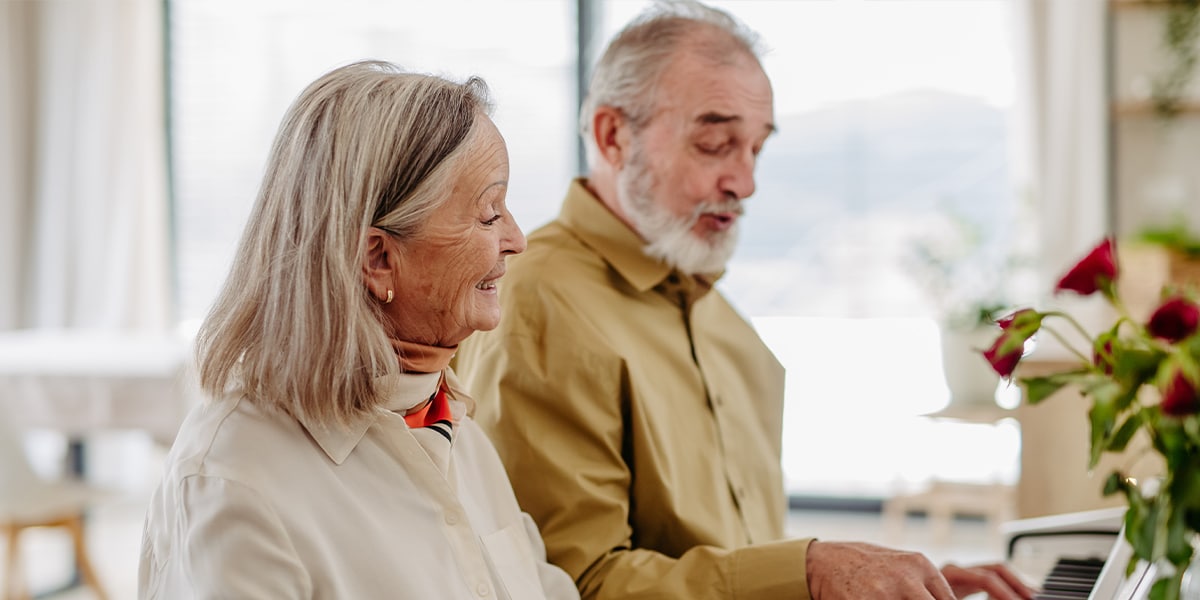
When you enter Tiburon Hills’ community space, one of the first things you’ll see is a piano nestled comfortably in the corner. It can be easy to overlook something like a piano, as they are so often used just to decorate a room, but it’s not so easy to overlook at Tiburon Hills. Here, it’s not uncommon to find our residents using their amazing talents to liven up our atmosphere. One day, you’ll see the piano being used in a duet with a cello, and the next you’ll catch a resident playing Get Back by The Beatles like he was John Lennon himself. This piano helps our residents see that recovery doesn’t necessarily mean slowing down. It means finding a new rhythm.
Recovery is often described in clinical terms, and it’s easy to get lost in the weeds discussing treatment plans, therapy goals, medication management, and discharge timelines. But at Tiburon Hills Care Center, we know that healing is also about rediscovering joy, and for us, that rediscovery sometimes begins with something as simple as a piano in the community space.
For some residents, it’s a reminder of a lifelong love of music. For others, it becomes a new and unexpected opportunity to connect, express emotion, and participate in community life. Whether someone is playing a familiar hymn, reliving Beatlemania, or simply listening as another resident performs, the piano becomes a gathering point. In those moments, rehabilitation feels less like a clinical process and more like a return to living.
The Rhythm of Recovery
In a skilled nursing facility, especially during post-acute recovery, patients can sometimes feel as though life has been paused. Surgery, illness, or injury may have disrupted daily routines and personal independence. At Tiburon Hills Care Center, the goal is not only to restore physical strength through therapy, but also to help residents find a new rhythm that blends healing with meaningful engagement.
Music plays a powerful role in that process. Studies have long shown that music can improve mood, reduce anxiety, and even support cognitive function. But beyond the science, music brings people together. A single song drifting from the community piano can spark conversations, shared memories, laughter, and hope. Residents who may have been feeling uncertain or isolated, as we all do at times, often discover common ground through melodies they recognize.
What’s Your Rhythm?
Of course, the piano is just one example of the activities available at Tiburon Hills Care Center. Our activities program is designed to meet residents where they are, offering a variety of ways to stay engaged. From group activities and creative arts to social events and holiday celebrations, patients are encouraged to participate at their own pace. These activities complement clinical care, reinforcing the idea that healing involves the whole person and not just the diagnosis.
For individuals recovering in a skilled nursing facility, maintaining (and sometimes rediscovering) a sense of identity is essential. A former teacher may enjoy leading a trivia session. A lifelong musician might share their talents at the piano. Someone who never considered themselves artistic may discover a new interest in crafts or group games. Each activity offers more than entertainment; it provides purpose, connection, and confidence. We do our best to plan a wide variety of activities so everyone has a chance to be completely in their element.
Find Your Rhythm at Tiburon Hills Care Center
At Tiburon Hills Care Center, care extends far beyond medical treatment. The presence of a piano in the common space, offering a full activity schedule, making delicious food, and connecting with our residents all come from the same place: the belief that life does not stop during recovery. Especially during the process of healing, there is room for music, laughter, creativity, and connection.
Finding a new rhythm of life looks different for each resident. For some, it begins with pressing a single piano key. For others, it starts by simply listening. In those shared moments, though, patients are reminded that they are not just recovering. They are more than their recovery, and they are still living, growing, and enjoying the music of life.